
Introduction: A Frequently Asked Question
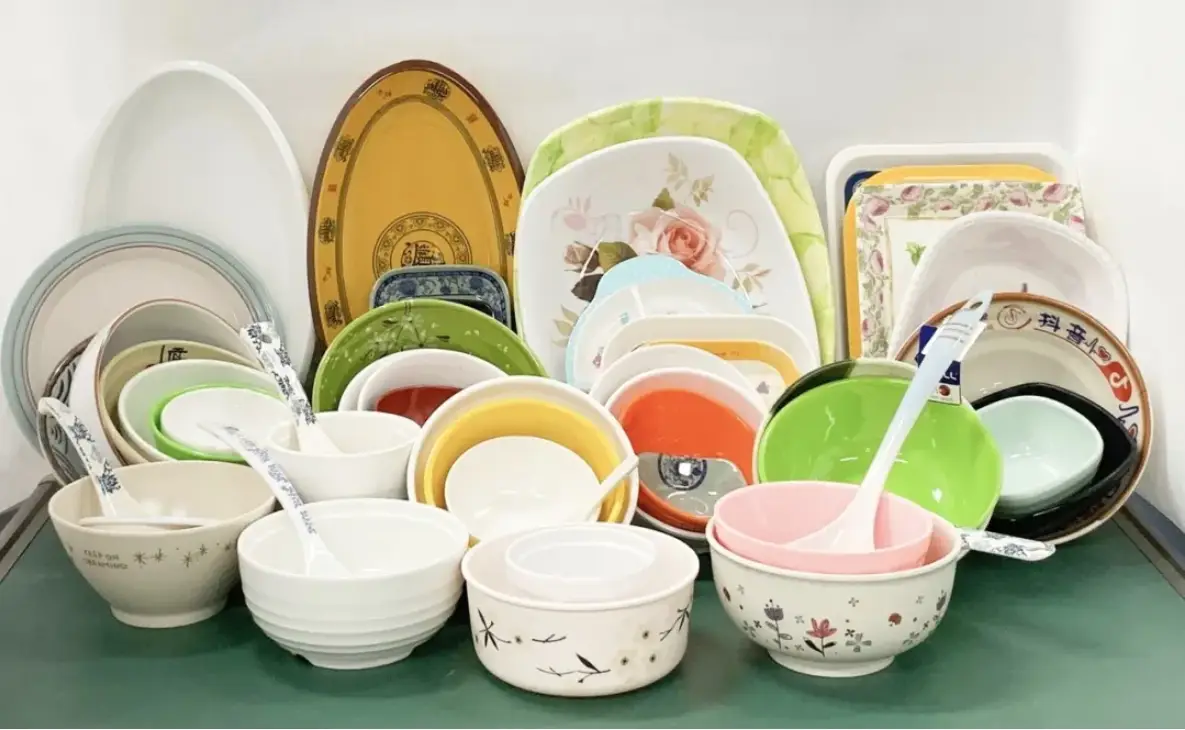
"Are these melamine dishes just plastic bowls?"—This is perhaps one of the most common questions we encounter at trade shows, during client consultations, and in daily sales. Behind this seemingly simple query lies deep-seated consumer concern about material safety and a key cognitive gap that the industry must urgently address. Today, we delve into this topic.
1. Scientific Definition: Part of the Polymer Family, But Not the Same "Branch"
From a broad chemical classification perspective, melamine (chemical name: melamine-formaldehyde resin) is indeed a polymer, placing it in the same macro-category as plastics (like PP, PS). However, this is similar to saying "humans and chimpanzees are both primates"—while related, they are fundamentally different.
2. Process & Performance: Why Melamine is the Foodservice Industry's "Favorite"
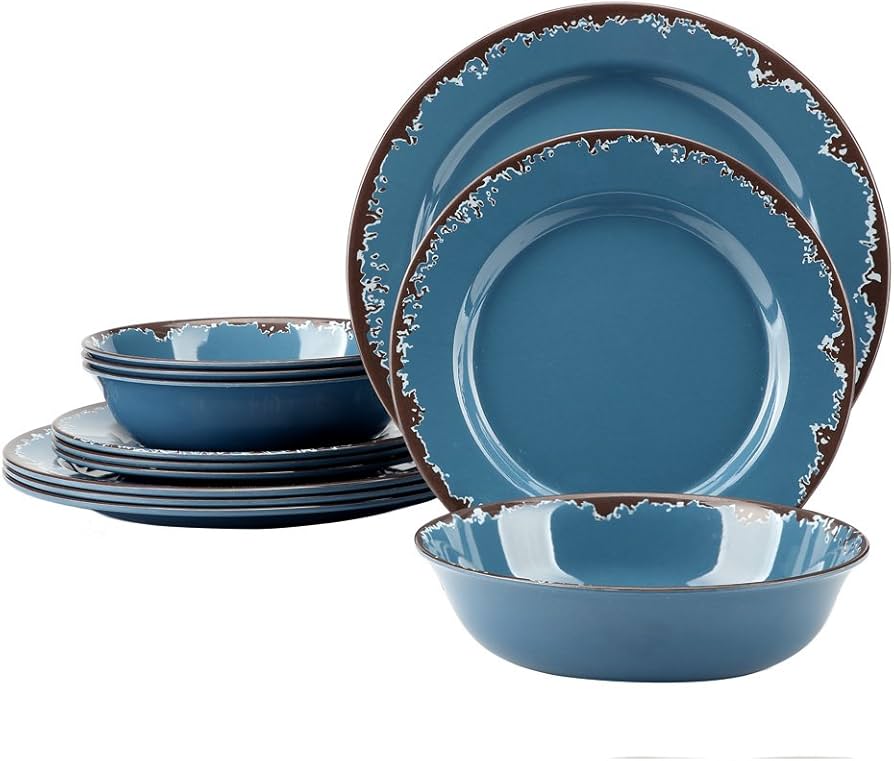
Melamine is not a common thermoplastic. Its manufacturing employs a thermosetting process: an irreversible chemical reaction under high temperature and pressure forms a dense, cross-linked three-dimensional network structure. This grants it:
1. A ceramic-like feel and weight, enhancing dining aesthetics.
2. Exceptional physical properties: Shatter-resistant, scratch-resistant, with a lifespan 5-10 times that of ordinary plasticware, significantly reducing replacement costs for foodservice businesses.
3. Stable chemical inertness: Does not release harmful substances under normal use temperatures, and can pass stringent certifications like US FDA and EU LFGB.
Core Differences Comparison Chart:
| Property | Melamine Resin (High-Quality) | Common Plastics (e.g., PP, PS) | Inferior Imitation Material (Urea-Formaldehyde Resin) |
|---|---|---|---|
| Heat Resistance | Excellent (Stable from -30°C to 120°C) | Moderate (Typically <100°C) | Poor (Prone to releasing harmful substances above 70°C) |
| Durability | High hardness, impact-resistant, chip-proof | Softer, prone to scratches and deformation | Brittle, prone to cracking |
| Safety | Stable after curing, complies with food contact standards | Must meet food-grade standards | May release formaldehyde, especially with heat/acid |
| Feel & Texture | Ceramic-like, substantial and smooth | Lightweight, plastic feel | Light, cheap feel |
Conclusion: Look Beyond the Label, Focus on the Essence
So, returning to the initial question: "Is melamine just plastic?" A more accurate answer is: Melamine is a specialized polymer material with unique properties and high safety standards, making it a superior solution for foodservice tableware.
We call on industry peers and consumers to move beyond the simplistic label of "is it plastic" and instead focus on "does it comply with food contact material safety standards" and "does it meet the needs of the use case." Choosing reputable manufacturers, recognizing safety certifications, and understanding proper use and care are the keys to allowing melamine tableware—this excellent innovation—to serve our lives safely, aesthetically, and durably.
